
Faith on the Margins: The Struggle of Muslims in Northeast India

Faith on the Margins: The Struggle of Muslims in Northeast India
Introduction: A Region Apart
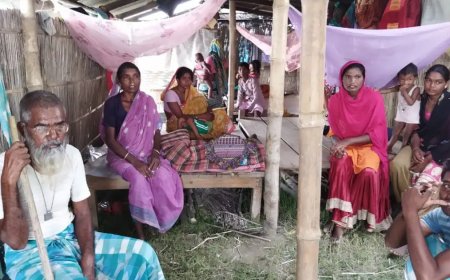
Northeast India—a mosaic of over 200 ethnic groups—shelters Muslim communities facing layered challenges. Unlike mainland Indian Muslims, Northeastern Muslims navigate a unique landscape shaped by colonial legacies, tribal identities, and geopolitical isolation. Comprising 22% of the region's population (versus 13% nationally), they confront discrimination, administrative neglect, and identity politics that threaten their place in this fragile ecosystem 18.
1. Historical Context: Colonial Shadows and Partition Trauma
-
"Mongolian Fringe" Legacy: British administrators like Olaf Caroe categorized Northeast peoples as racially distinct from "India proper," fostering enduring alienation. Post-1947 proposals even considered making the region a British Crown Colony separate from India 8.
-
Partition's Divisive Echo: While Hindus lean toward viewing Partition as a "good thing," Muslims predominantly see it as a "bad thing" for interfaith relations—a schism that still fuels distrust 1.
-
Borderland Statelessness: The region hosts 40,000+ Rohingya refugees who face double exclusion—rejected by Myanmar and deemed "infiltrators" in India, worsening local anti-Muslim sentiment 4.
2. Discrimination: Data and Daily Realities
Key Statistics: Perceptions vs. Experience
| Indicator | Northeast India | National Average | |
|---|---|---|---|
| Muslims reporting discrimination | 36-40% | 21% | |
| Hindus perceiving anti-Muslim bias | 53% | 22% | |
| Viewing communal violence as "major issue" | 75% | 65% | 1 |
-
Regional Hotspots: In Northern/Northeastern states, religiously observant Muslims are twice as likely to report discrimination (39%) versus those in Central India (10%) 1.
-
Intersectional Targeting: Muslim women face compounded bias—visible religious attire makes them 2x more vulnerable to harassment than men 11.
-
Economic Exclusion: Poverty correlates strongly with discrimination. Muslims experiencing financial hardship report 30% more religious bias 1.
3. Governmental and Administrative Challenges
A. The Waqf Land Crisis
-
Northeast’s Muslim endowments face systematic plunder. In Madhya Pradesh (pattern likely replicating in Northeast), 90% of Waqf properties are encroached or litigated 14.
-
Example: In Ujjain, authorities bulldozed a century-old mosque for a Hindu temple corridor, dismissing Waqf Board claims as "social cause" overrides 14.
-
Legal Weaponization: Proposed Waqf Act amendments may allow non-Muslim board appointments, risking further alienation of $14bn in Muslim charitable assets 14.
B. Citizenship and Statelessness
-
Rohingya refugees in Assam/Tripura live in legal limbo. Labeled "illegal Bengalis," they’re denied healthcare and education, inflaming local tensions 4.
-
Policy Paradox: Despite fleeing Buddhist persecution in Myanmar, they face suspicion as "Islamization agents" in Hindu-majority areas 413.
C. Political Marginalization
-
State governments prioritize tribal autonomy over minority rights. Example: Inner Line Permit systems in Nagaland/Mizoram restrict "outsider" Muslims from owning land 8.
4. Societal Tensions: Local Suspicion and Media Narratives
-
"Mainland Muslim" Stereotyping: Assamese Muslims face hostility when mistaken for "Bangladeshi infiltrators." During 2023 violence, rumors triggered mob attacks on Bengali-speaking Muslims 13.
-
Far-Right Exploitation: Post-2021 Myanmar coup, far-right groups circulated videos alleging "Muslim takeover plots," leading to boycotts of Muslim businesses in Manipur 11.
-
Interfaith Erosion: Historic Sufi-Buddhist syncretism in Arunachal is weakening as Hindutva groups promote "religious purity" narratives 10.
5. Pathways to Justice: Community and Policy Solutions
-
Digital Waqf Management: Geotagging all religious properties (as done partially in MP) could prevent illegal acquisitions 14.
-
Interfaith Coalitions: Initiatives like SALAAM’s community dialogues (successful in Ireland) could bridge Hindu-Muslim-Tribal divides 11.
-
Economic Inclusion: Redirecting 15% of Northeast Council funds to minority skill development could reduce poverty-linked discrimination 1.
-
Media Counter-Narratives: Supporting indigenous Muslim journalists to document stories like the Miya Muslims of Assam combats dehumanization 13.
"The Northeast remains a test of India’s capacity to reinvent itself and accommodate the non-mainstream." — Pradip Phanjoubam, The New Indian Express 8
Conclusion: Reinventing Coexistence
Muslims in Northeast India embody resilience—from Kerala’s 7th-century Cheraman Juma Masjid builders to Rohingya refugees rebuilding lives. Their struggle isn’t just about rights; it’s a referendum on India’s constitutional promise amid rising majoritarianism. As tribal identities and faith intersect, solutions must honor the region’s unique history: neither "mainland" majoritarianism nor colonial fragmentation can dictate its future 810.
Key Resources for Further Study:
-
Pew Research Center: Religious Freedom in India (2021)
-
On the Edge of Empire by David R Syiemlieh (Historical Plans for Northeast)
-
SALAAM Project Reports on Anti-Muslim Racism (EU)
What's Your Reaction?
 Like
0
Like
0
 Dislike
0
Dislike
0
 Love
0
Love
0
 Funny
0
Funny
0
 Angry
0
Angry
0
 Sad
0
Sad
0
 Wow
0
Wow
0